
Image pending
CUSTOM BATTERY SOLUTION PROVIDER
Custom Battery SolutionsEngineered Around Your Product
From electrical requirements and BMS integration to mechanical design, validation and production, we develop battery systems around your product and application.
For product teams, OEMs and equipment manufacturers. From the first brief to production planning.
Choose a short project inquiry or a detailed technical brief.
Product requirements Integrated battery system Production planning
01 / THE STARTING POINT
Your Product Defines the Battery
A standard pack is useful when it meets the whole brief. When fit, runtime or integration becomes a constraint, start with the product—not a part number.
Product envelope & battery integrationIMAGE PLACEHOLDER
- Fit & handling
- Available space · Weight
- Performance
- Voltage · Runtime · Power demand · Peak current
- System interfaces
- Communication · Charging
- Operating & business context
- Operating environment · Certification requirements · Production volume
02 / FROM CONSTRAINT TO SOLUTION
A Requirement Becomes a Design Decision
Begin with the constraint that matters most to your product. Evaluate the trade-offs, then define what the battery system needs to deliver.
01Limited space
Engineering responseEvaluate cell format, pack architecture and mechanical design against the installation envelope.
Solution to defineA pack layout and mounting concept that can be reviewed inside your product.
02Long runtime
Engineering responseTranslate the duty cycle into energy demand; compare cell options, capacity, weight and charging trade-offs.
Solution to defineAn energy configuration and a runtime target to validate under representative loads.
03High peak power
Engineering responseAssess cell selection, electrical architecture, current paths and protection against the load profile.
Solution to defineA power delivery concept with defined load limits and protection criteria.
04Host communication
Engineering responseDefine the information exchange, BMS requirements and firmware integration with the host team.
Solution to defineAn agreed interface definition and a plan to verify host compatibility.
05Harsh environment
Engineering responseReview the enclosure, connectors and thermal approach against intended exposure and operating conditions.
Solution to defineA protection concept and validation plan aligned with the application.
These are project evaluation paths, not pre-approved specifications. Chemistry, protocols, protection targets and feasibility are confirmed during scoping.
03 / ONE INTEGRATED SYSTEM
A Complete Battery System, Not Just a Battery Pack
Cells are one part of the solution. The interfaces between energy, protection, mechanics and your host product define how the system works together.
Battery system architecture / exploded viewIMAGE PLACEHOLDER
- 01Cell
- 02Pack architecture
- 03Electrical system
- 04BMS
- 05Mechanical integration
- 06Communication
- 07Charging
- 08Host product
04 / DEFINE THE SCOPE
Designed Around Your Requirements
Start with what is fixed, what is a target and what still needs discussion. The development scope follows those decisions.
- Electrical
- Voltage
- Capacity & energy
- Continuous / peak current
- Charging
- Mechanical
- Dimensions & shape
- Housing
- Connector & cable
- Mounting
- BMS & communication
- Protection
- Monitoring
- Communication
- System integration
- Environment & compliance
- Temperature
- Ingress protection target
- Mechanical environment
- Compliance requirements
No specification is assumed. Unknown requirements can remain “To be discussed” in your technical brief.
05 / YOUR APPLICATION
Different Products. Different Battery Decisions.
The product’s working cycle, physical envelope and environment shape the brief.
Image pending
02
Drone / UAV
Flight loads, pack weight and aircraft integration.
Explore requirements for Drone / UAVImage pending
03
Unmanned Equipment
Autonomous duty cycles, monitoring and field conditions.
Explore requirements for Unmanned Equipment- Smart Devices / Small Appliances
- Power Tools
- Portable / Outdoor Equipment
- Vehicle / RV
- Energy Storage
06 / DEVELOPMENT JOURNEY
A Clear Path from Brief to Build
Agree the scope and acceptance criteria before committing to the next stage.
- 01
Define
Set the product requirements, priorities and open questions.
- 02
Engineer
Develop the system concept and review integration trade-offs.
- 03
Prototype
Build samples against the agreed design for evaluation.
- 04
Validate
Evaluate the prototype against agreed application criteria.
- 05
Produce
Prepare the approved design for pilot and production release.
07 / BEYOND THE DESIGN
Designed to Be Validated
A design target is not a test result. Define how the battery will be evaluated in the intended application, then review the evidence before release.
Battery validation setupIMAGE PLACEHOLDER
- Electrical
- Load, charging and protection criteria.
- BMS
- Monitoring, control and interface behavior.
- Mechanical
- Fit, mounting and connection integrity.
- Environmental
- Conditions relevant to the operating brief.
- Application
- Behavior within the host product and duty cycle.
- Production
- Acceptance criteria for repeatable builds.
08 / OEM & ODM DEVELOPMENT
From Custom Design to Production
The prototype is a checkpoint. Production planning connects the reviewed design with assembly requirements, quality criteria and controlled changes.
- Requirements
- Engineering
- Prototype
- Validation
- Pilot
- Mass production
Agree the design release, BOM, work instructions and quality criteria appropriate to the project. Pilot findings inform the production release.
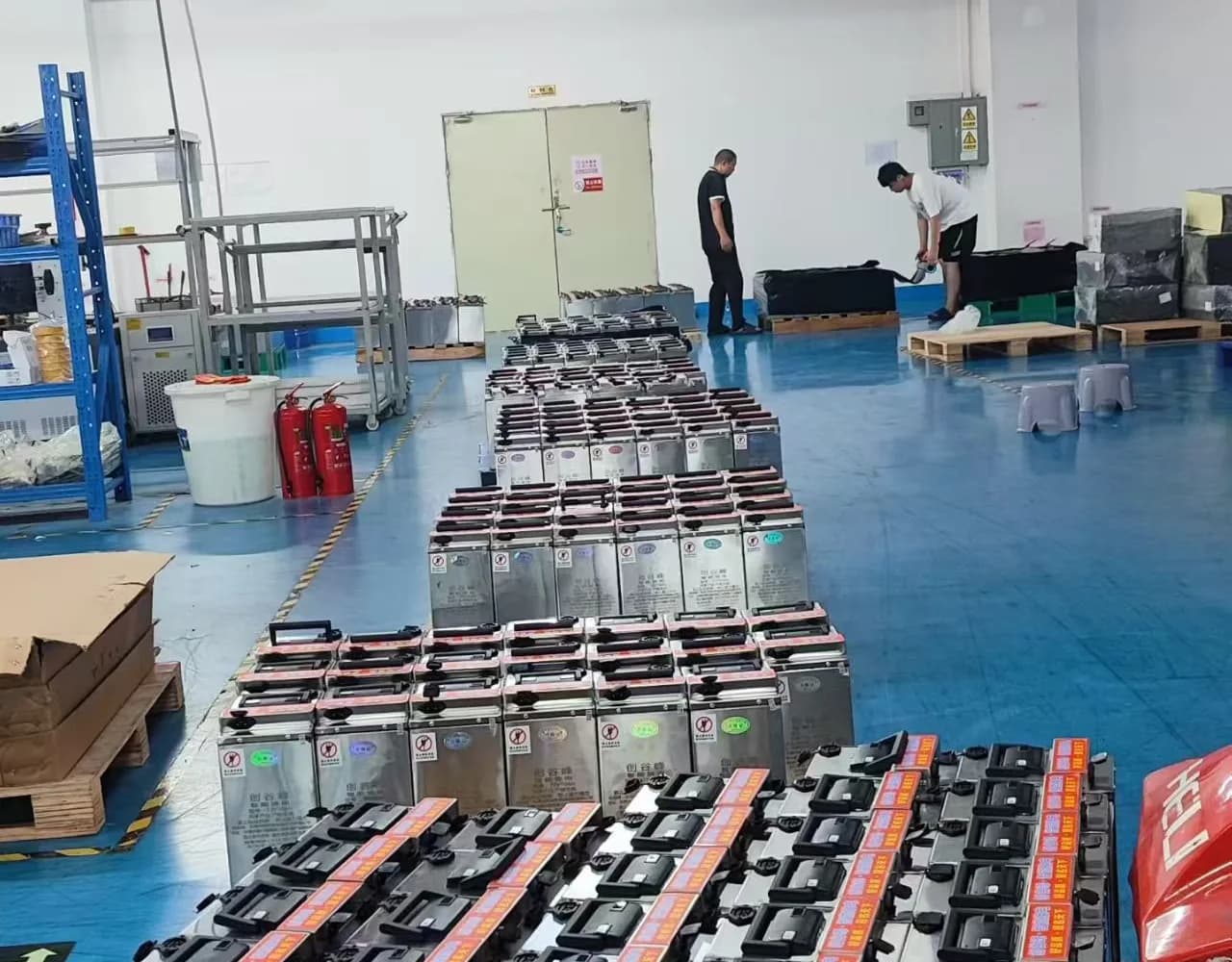
Engineering to production releaseBattery assembly & productionIMAGE PLACEHOLDER
09 / EVIDENCE
Proof Behind the Solution
Project evidence should connect a requirement to the design decision and its validation.
Evidence pending approval. Project photographs, reports and certification documents will appear here only after source and publication review.
- Engineering
- Prototype
- Testing
- Manufacturing
- Certification
- Case study
PROJECT CONTEXT
Built Around Real Product Requirements
Follow the product challenge through the decisions, solution and validation outcome.
Case study pending approval. No customer, project result or performance claim is published yet.
- Customer / industry
- Application
- Challenge
- Requirements
- Engineering decision
- Solution
- Validation
- Outcome
BEFORE YOU START
Questions About Custom Battery Development
A useful brief starts with the product. You do not need every answer to begin.
What is a custom battery solution?
It is a battery system developed around a product’s electrical, physical and operating requirements. The scope may include cells, pack architecture, BMS, enclosure, interfaces, prototypes, validation and production documentation.
When does a product need a custom battery?
Consider custom development when available packs cannot meet the combination of space, runtime, power, weight, charging or host integration requirements. Compare the integration benefit with development effort, volume and project timing.
What information is needed to start?
Share the application, available space, voltage, runtime target and load profile. Add charging, communication, environment, target markets, expected volume and project stage where known. Drawings and requirement documents help clarify the brief; unknowns can be discussed.
Can the BMS be customized?
BMS requirements are evaluated as part of the project scope, including protection, monitoring, charging and host communication. Protocol support and firmware scope need confirmation for the specific application; no protocol is assumed from this page.
Can battery dimensions be customized?
Dimensions, shape, housing and mounting can be evaluated around the product envelope. Feasibility depends on cell options, power and energy requirements, clearances, thermal considerations and assembly constraints.
How is a custom battery validated?
Agree an evaluation plan based on the product requirements. Relevant electrical, BMS, mechanical, environmental and application checks inform design reviews. Standards, external testing and certification requirements are confirmed for the intended market and project scope.
How does development move to mass production?
Review prototype results, resolve design changes and agree the release documentation and quality criteria. Pilot builds provide a further checkpoint before production release. Deliverables and responsibilities are agreed for each project.
LET’S DEFINE YOUR BATTERY SOLUTION
What Does Your Product Need to Do?
Share your requirements, a drawing or the problem you are trying to solve. Start with a short inquiry or send a detailed technical brief.
Choose a short project inquiry or a detailed technical brief.